
 Europe
 Austria
 Belgium
 Bulgaria
 Croatia
 Czech Republic
 Denmark
 Estonia
 Finland
 France
 Germany
 Greece
 Hungary
 Ireland
 Italy
Italy Latvia
 Lithuania
 Luxembourg
 Malta
Malta Netherlands
 Norway
 Poland
 Portugal
 Romania
 Slovakia
 Slovenia
 Spain
Spain SwedenEurope
On this page
Motivation
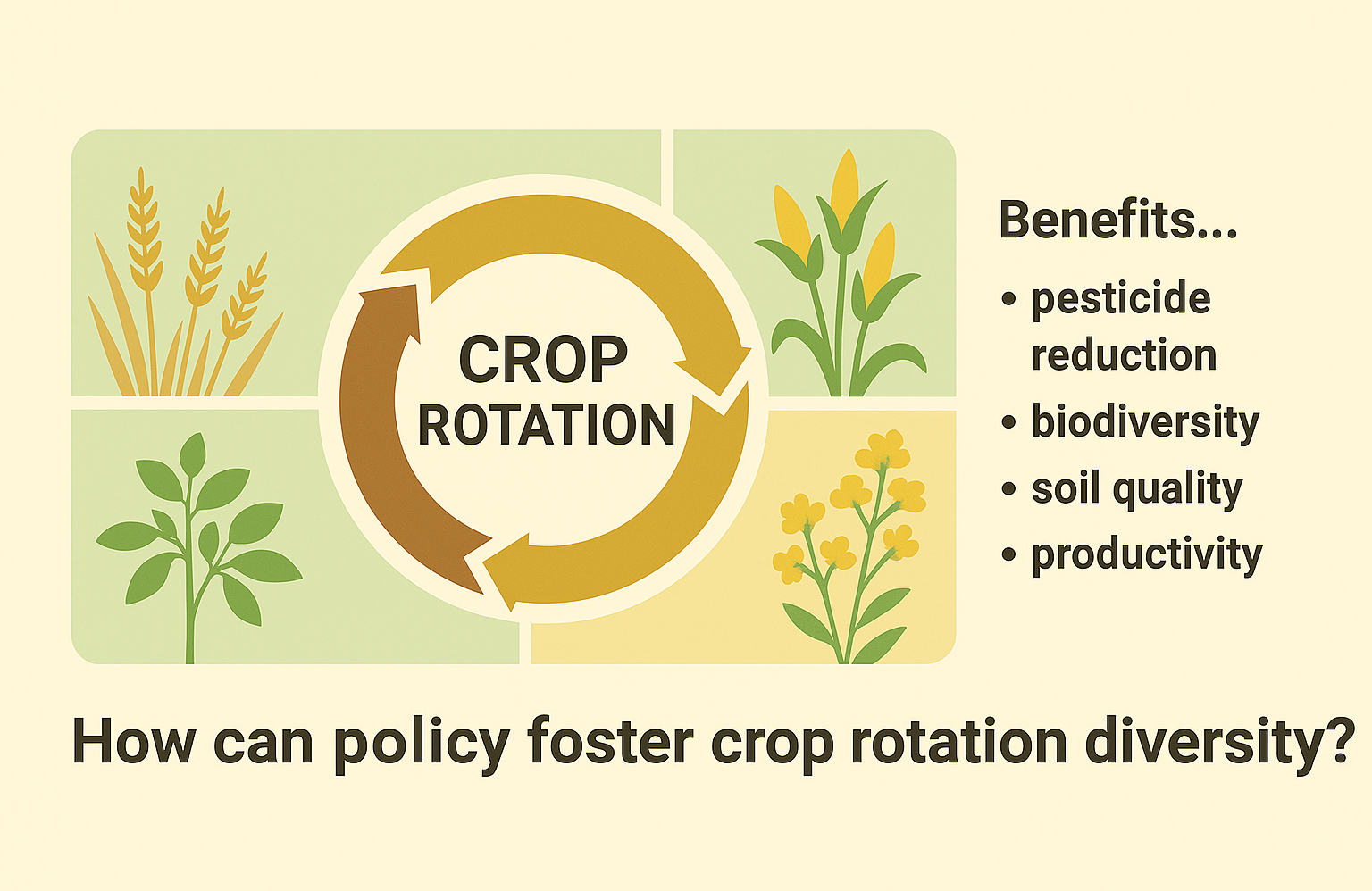
Diverse crop rotations bring benefits
Source: Generated by Chat GPT
A crop rotation describes the temporal succession of crops on a field. The diversity of crop rotation offers numerous environmental benefits, including reduced pesticide use and increased biodiversity.
Policies foster diversity
Policies already foster the diversification of crop rotations. The Common Agricultural Policy of the EU has several instruments to increase the diversity of what farmers grow. Among others, a certain level of diversity is required to receive direct payments, and more extensive diversity is supported with additional funding under so-called agri-environmental schemes.
Knowledge for future policy design needed
To design effective policies in the future, it is necessary to have knowledge of the current status of crop rotation diversity and various policy options. Especially, as the Common Agricultural Policy of the EU is currently being revised.
Comments
Loading comments...
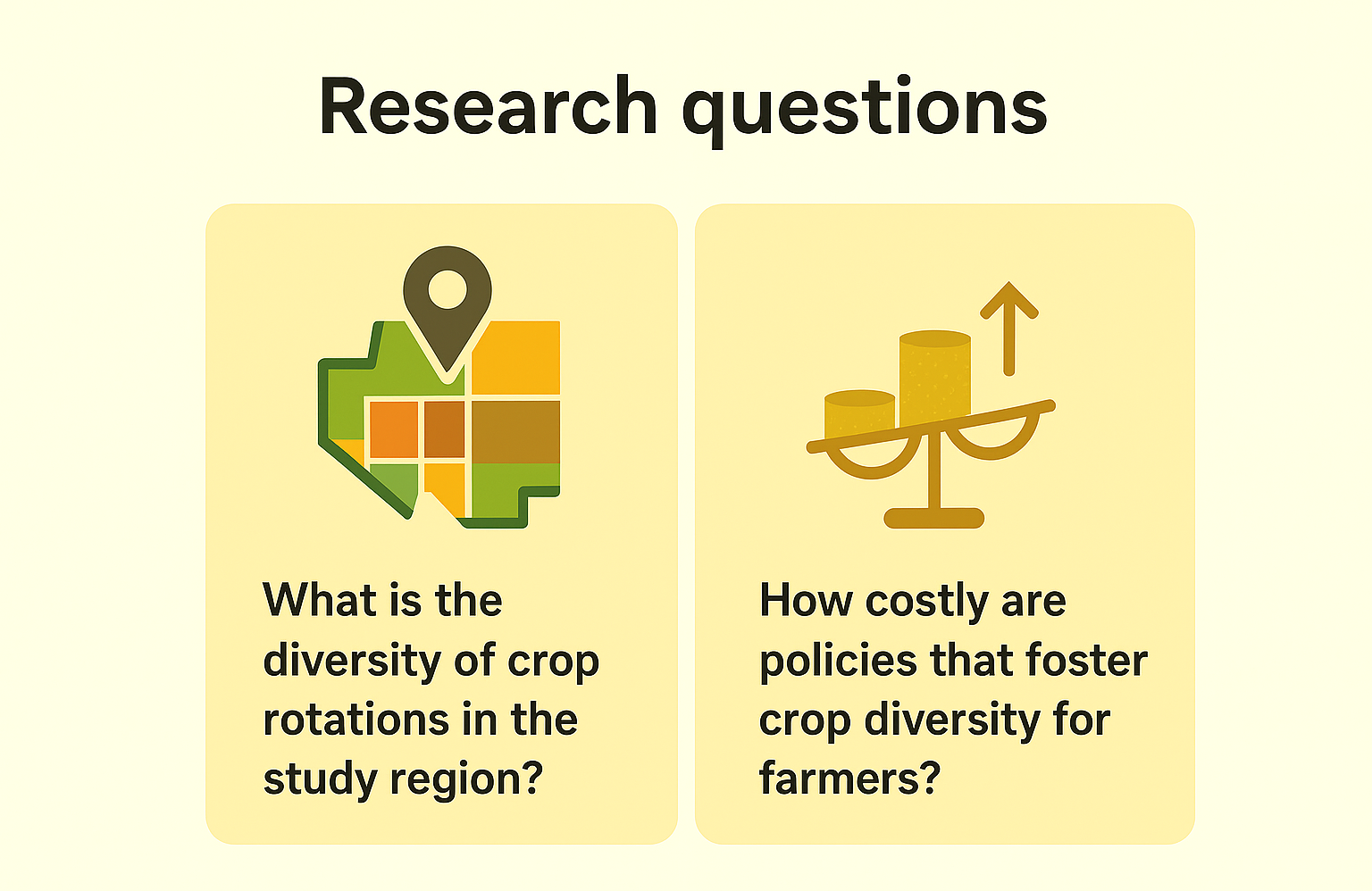
Research questions
Research questions
Source: Generated by Chat GPT
Comments
Loading comments...
Method
Crop rotation typology
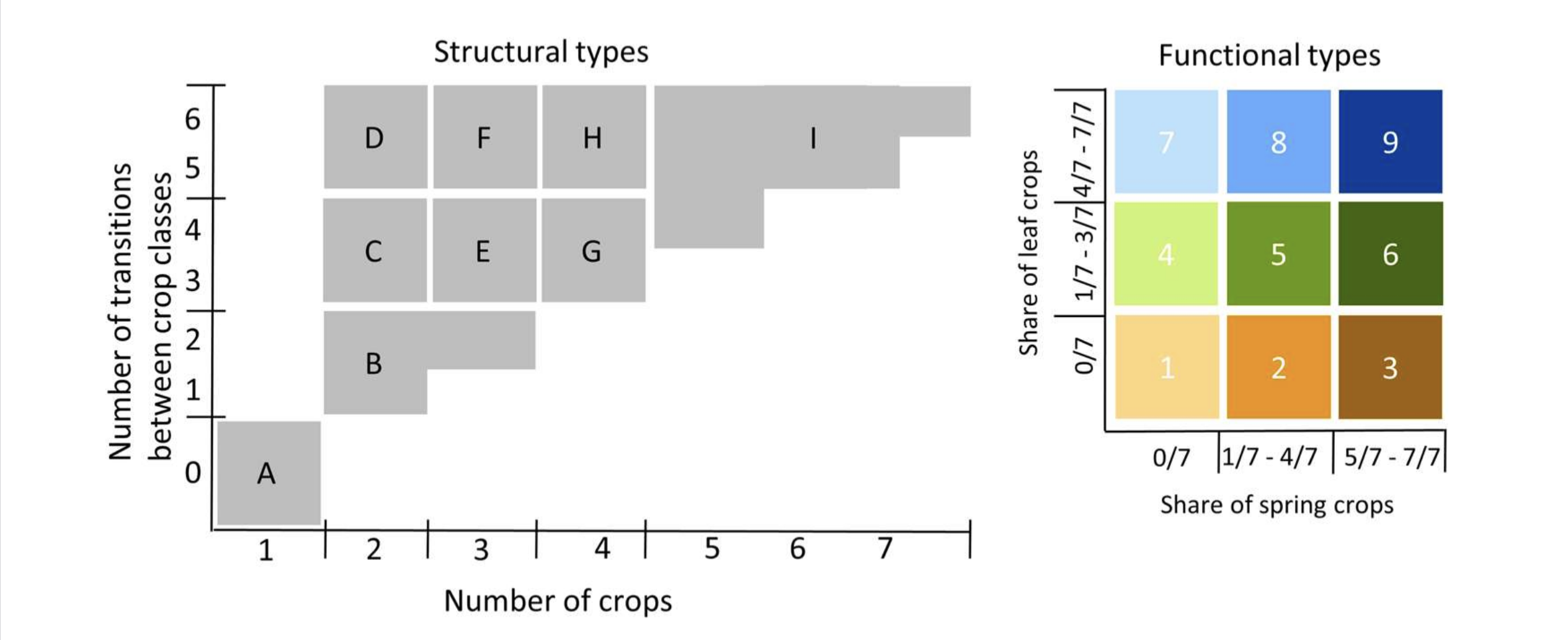
Source: Jänicke et al., 2022, based on Stein & Steinmann 2018
Farmers grow a lot of different crop rotations, causing the need to aggregate and simplify rotations for their analysis. Crop rotation typologies can be helpful as they categorize rotations according to predefined rules. We use a typology from Stein & Steinmann (2018) that groups rotations into functional (share of spring-sown and leaf crops) and structural diversity (number of crops and transition between crops).
Study region
We study the German Federal state of North Rhine-Westphalia. The state is characterized by very diverse and, in part, very intensive farming. It features intensive livestock production in the north on low-yielding soils, specialized arable farming on high-yielding soils, and dairy production in regions dominated by grasslands. To generate the typology results, we utilize data from the Integrated Administration and Control System (IACS) for 2019 to 2025, which provides the exact location of fields and the crops that have been grown.
FarmDyn modelling
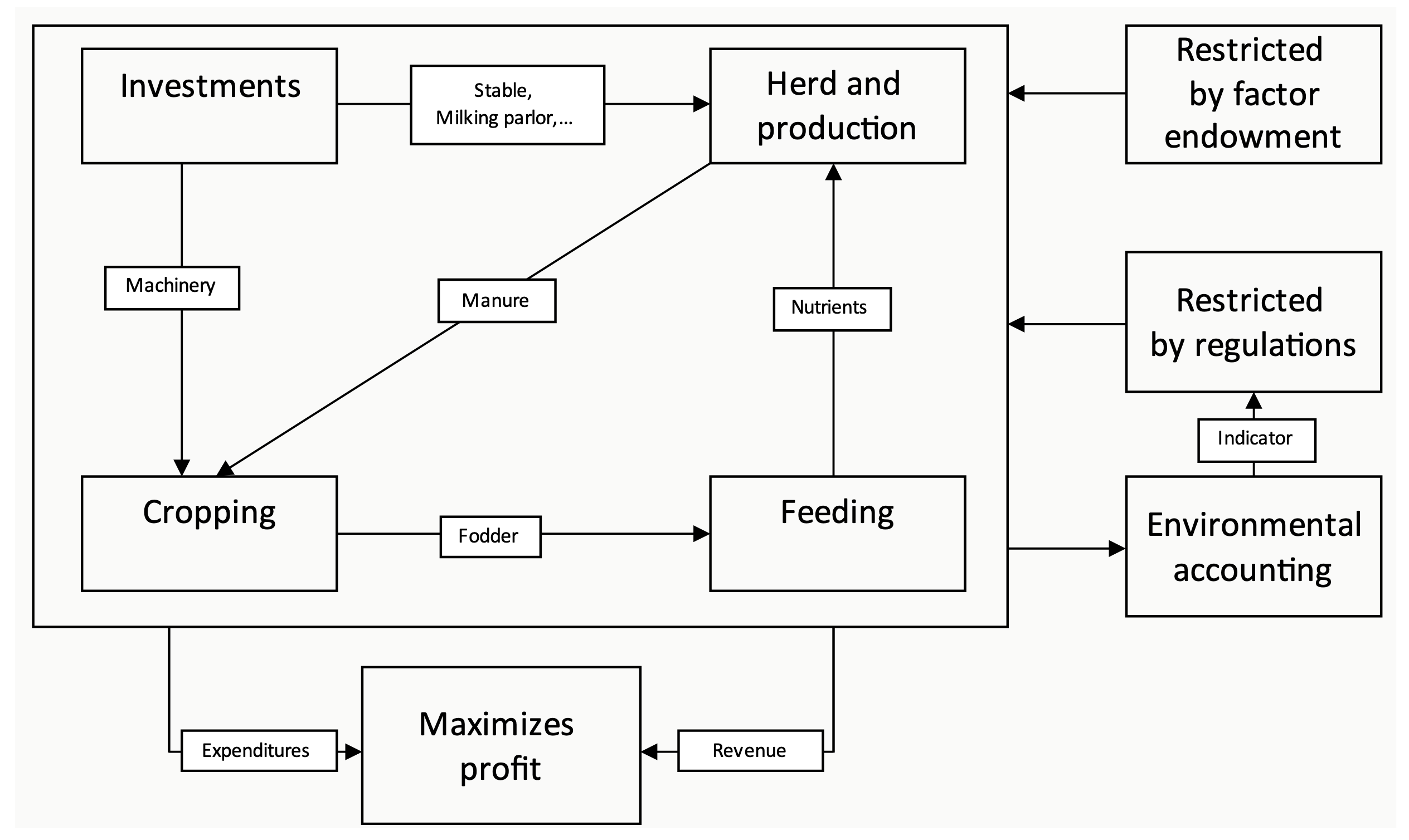
Source: Own graph, based on Lengers & Britz (2012)
To inform about policy options before their implementations requires tools that allow for analysing policies before their effects can be observed in reality, such as simulation models. We utilize the simulation model FarmDyn, which represents a single farm with its resources, such as land and labor, as well as current and future policy restrictions. It estimates the profit-maximizing reaction to a changing policy. Thereby, it provides insights into the economic implications of changing policies on crop rotation diversity.
Policy scenarios
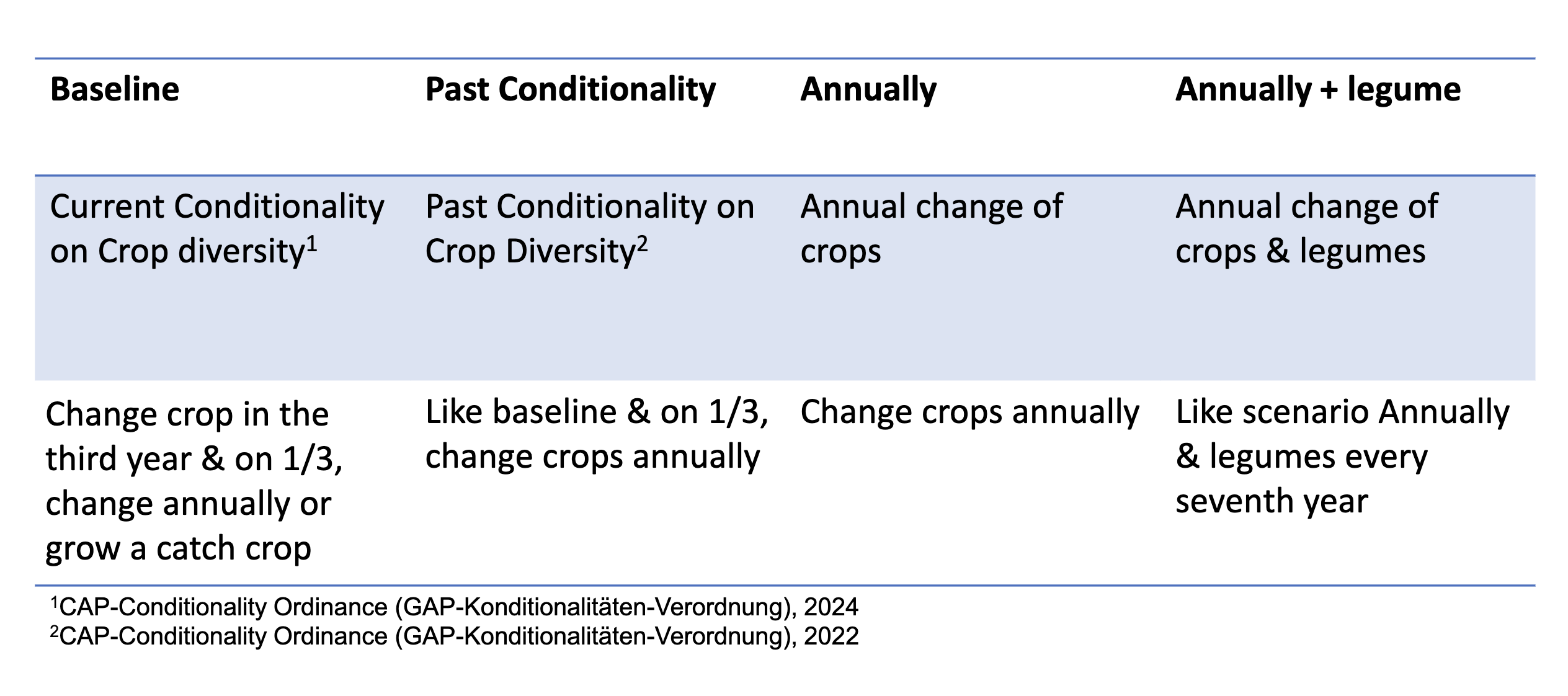
The policy scenarios assess changing requirements for crop diversity linked to direct payments, following the concept of Conditionality in the current Common Agricultural Policy. Hence, the model estimates the profit loss when requirements become stricter and when farms are economically better off by opting out of direct payments.
Typical farms
Analysis using farm-level simulation models, such as FarmDyn, requires access to individual farm data. For the results presented here, we used three typical farms for North Rhine-Westphalia. Arable MS - an arable farm with wheat-barley-maize rotation, typical for the Norther part of the state, Arable RR - an arable farm with wheat, barley, and sugar beet in its rotation, typical for the high-yielding fertile loess landscape in the western part, and Dairy - a dairy farm with a high share of maize in the rotation, typical for the Lower Rhine area. The data is taken from a farm typology from Kuhn & Schäfer (2018) and linked to the results on the crop sequence typology.
Comments
Loading comments...
Results
Structural diversity
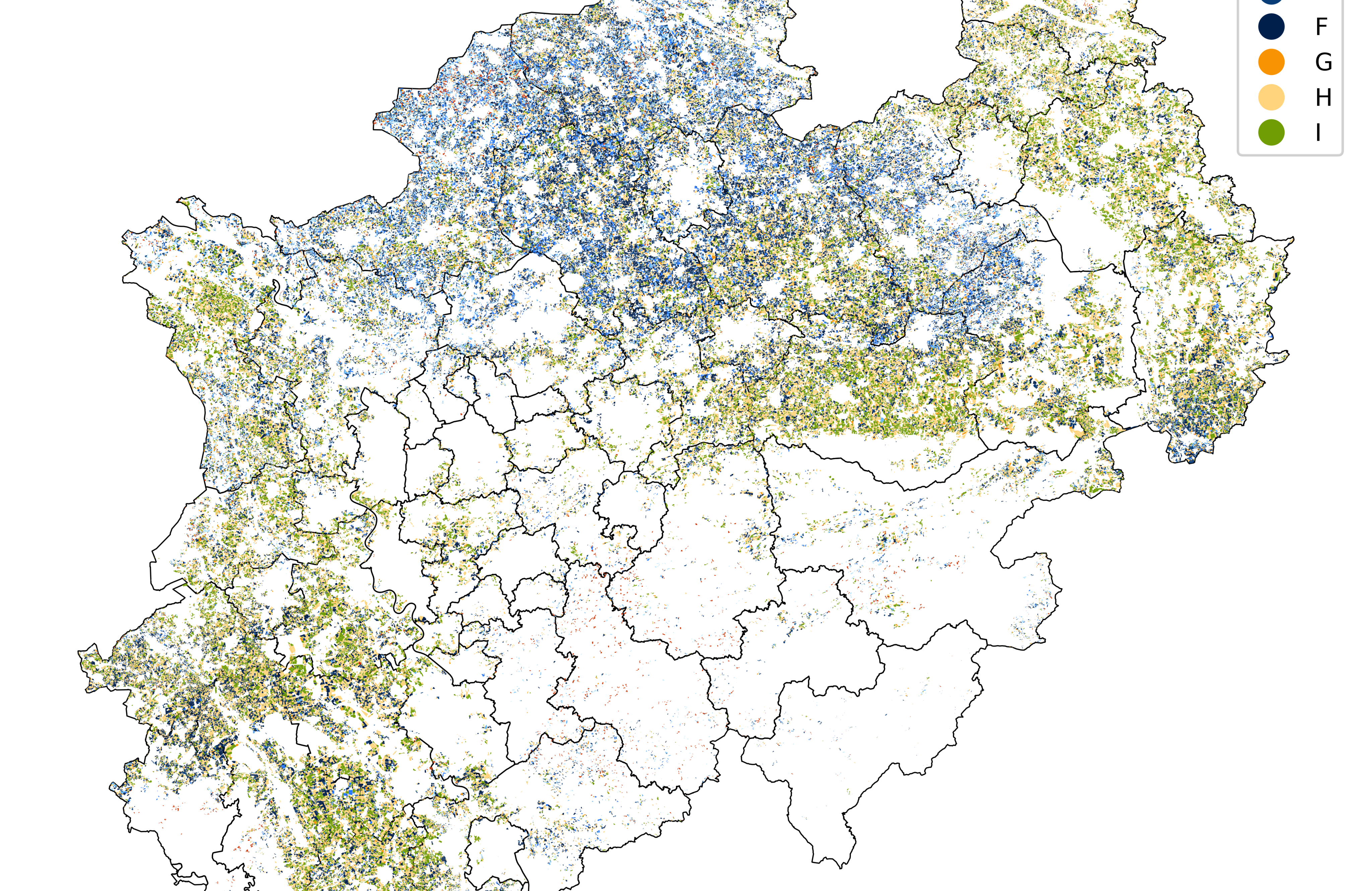
Structural diversity varies greatly across North Rhine-Westphalia. Crop rotations in the Münsterland region typically consist of only two or three crops. The grassland regions of the Bergisches Land and the Sauerland show medium diversity on their available arable land. The southern Rhineland, the Lower Rhine, East Westphalia, and northern South Westphalia exhibit high structural diversity, with a large share of areas featuring five or more crops.
Functional diversity
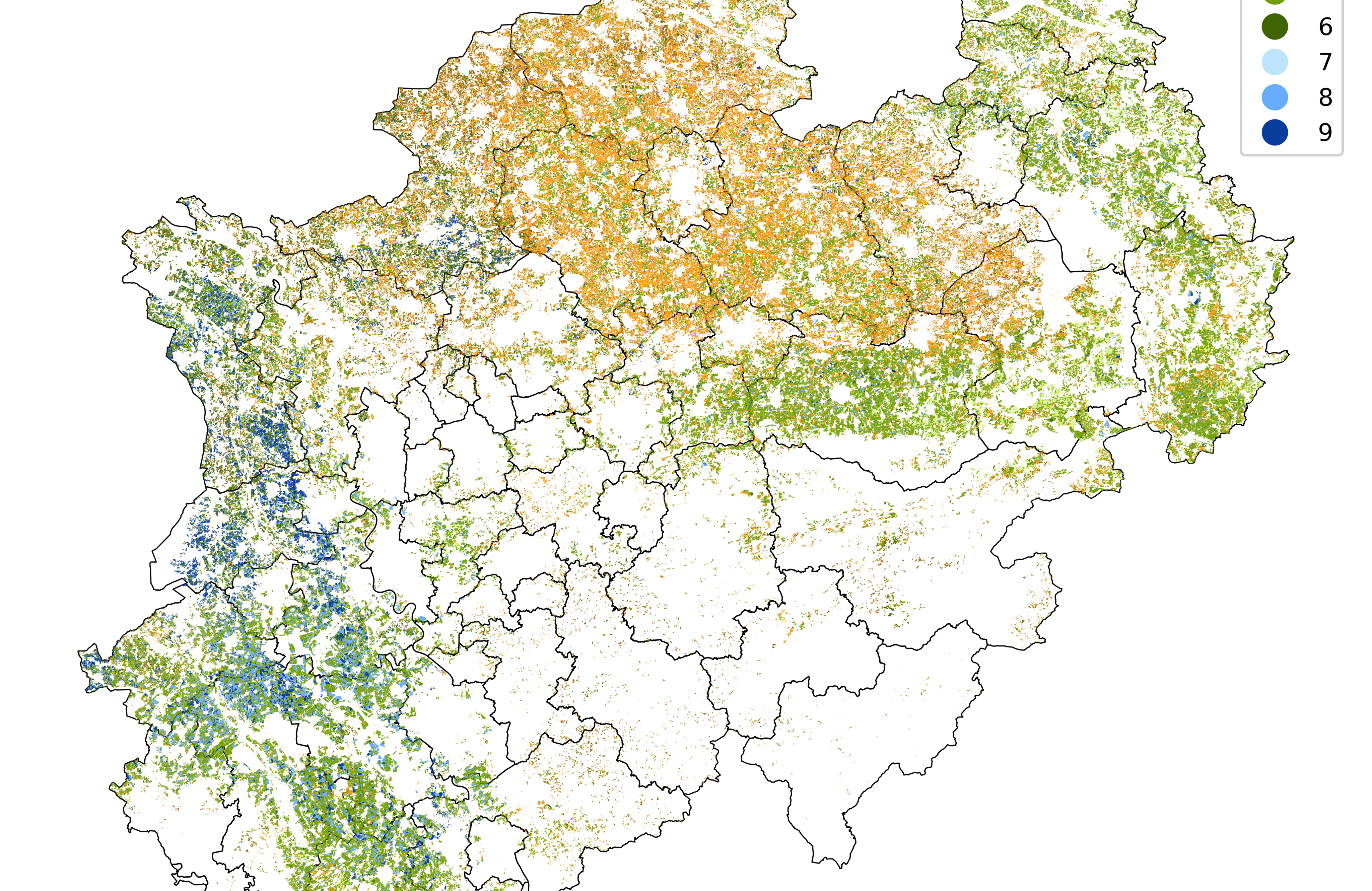
Functional diversity in North Rhine-Westphalia varies considerably. Crop rotations in the livestock-intensive Münsterland region typically include summer crops, primarily due to the dominance of maize cultivation. Leaf crops, such as rapeseed or legumes, are relatively rare. As a result, functional diversity is rather low. East Westphalia, northern South Westphalia, and the grassland regions show medium functional diversity. The southern Rhineland and the Lower Rhine exhibit the highest diversity. Here, the majority of rotations have spring-sown and leaf cops. This region also features crop rotations with very high shares of broad-leaved crops, due to the cultivation of vegetables, sugar beet, and potatoes.
For further information
We developed an interactive website where crop rotation typology results are presented at both the plot and more aggregated geographical unit level - coming soon.
Costs for further diversification are heterogeneous
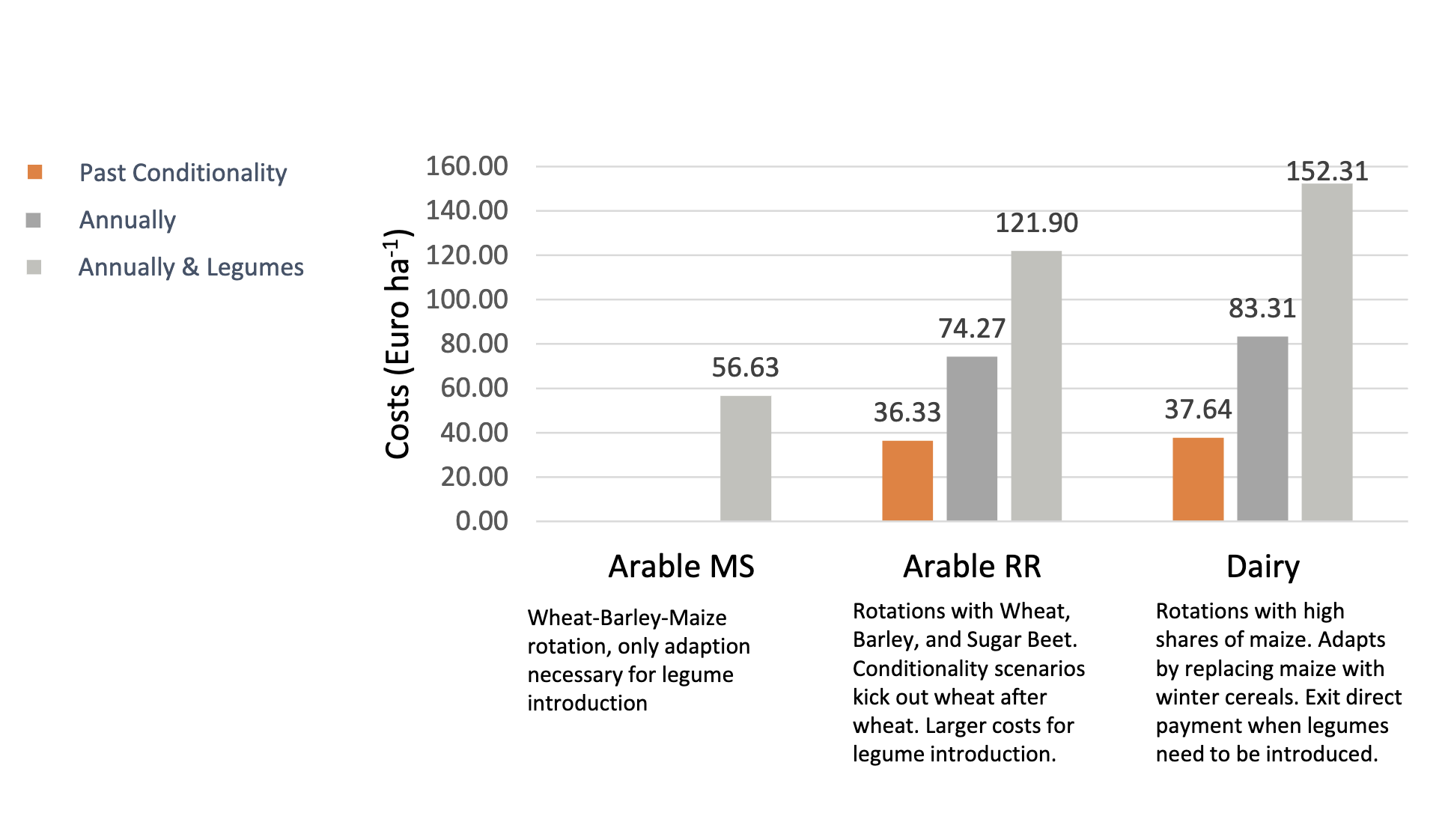
Preliminary results indicate that the costs associated with further crop diversification vary across farm types and are strongly influenced by the farm-specific context. The arable farm from high-yielding soil regions (Arable RR) and the dairy farm have, for instance, higher costs associated with introducing legumes. This is caused by excluding high-profit arable crops when introducing legumes for the arable farm, and a gap in forage for the dairy farm when replacing silage maize with legumes.
Quitting direct payments depends on output prices and payment level
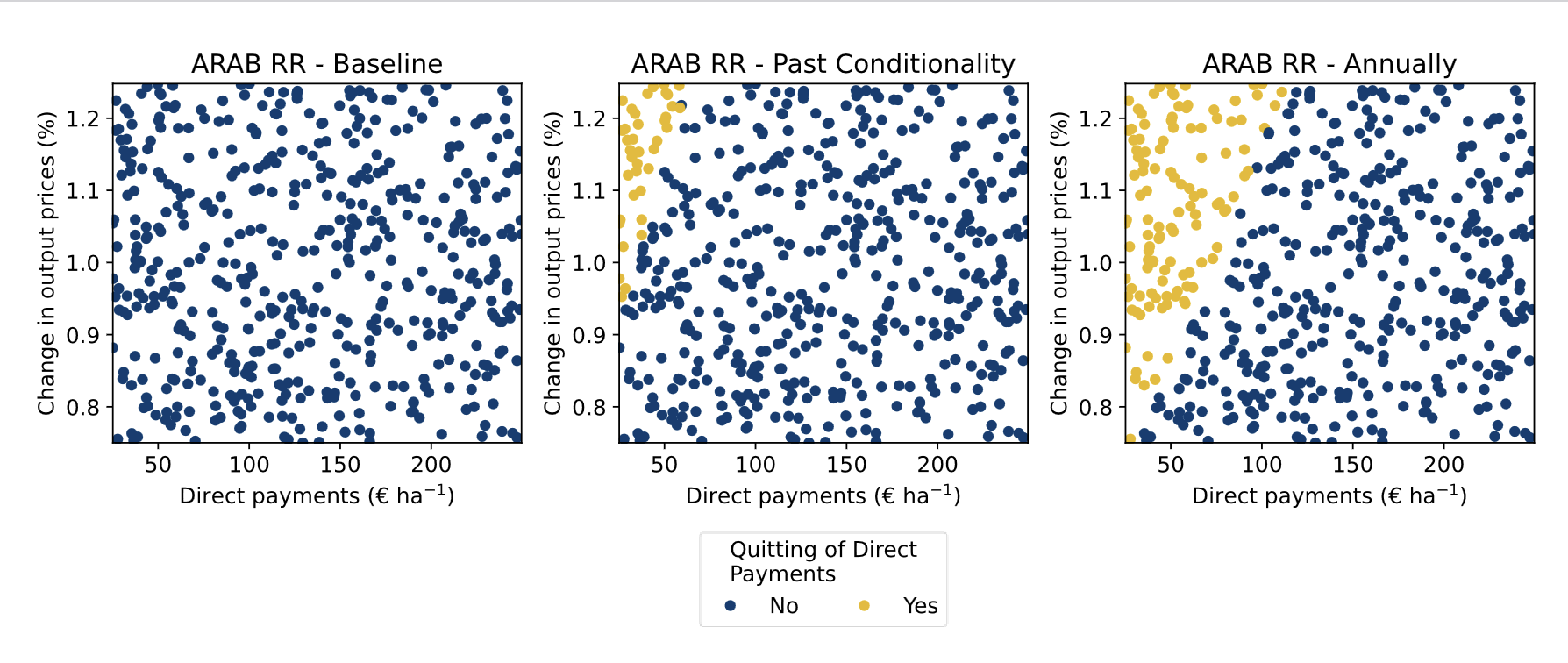
Preliminary results indicate that whether it is economically reasonable to discontinue direct payment depends strongly on the stringency of the requirements and the amount of payment. Both are being influenced directly by policymakers. However, output price levels also have a substantial impact and are, within the current policy framework, mainly outside the control of policy.
Comments
Loading comments...
Policy recommendation
What should be prioritized to improve crop rotation diversity in the case study region?
The results of the diversity of rotations show hotspots that policymakers and extension services need to address.
- Inclusion of leaf crops and, in general, wider rotations in the Münsterland regions, e.g., by fostering legume cultivation.
- Pure winter crop cultivation and maize monoculture are negligible phenomena
How to design effective policies to foster crop diversity?
- The costs associated with diversification are highly heterogeneous, which challenges the effectiveness of uniform payments under current Common Agricultural Policy measures.
- Stricter crop diversity requirements linked to direct payments may increase incentives for farmers to leave the direct payment schemes—especially if payment levels are simultaneously reduced, as is currently under discussion.
Comments
Loading comments...